Built for symptoms that do not explain themselves.
Intero is a private iPhone app for people trying to understand pelvic and urinary symptoms that keep coming back or resist simple explanations. It is built to make symptoms easier to track, understand, and explain.
I started building Intero after years of trying to track my own symptoms and realizing that most tools preserved entries, not patterns. They could store what happened today, but they could not help explain what changed before symptoms got worse.
Most symptom trackers are built like generic logs. They are good at storing entries and bad at helping someone understand what those entries add up to. For pelvic and urinary symptoms, that is a serious limitation. The useful clue is often in the sequence, what changed before symptoms got worse, and what your baseline actually looks like over time.
Intero was built around a narrower idea: observe carefully, structure the signal, and return it in plain language. The goal is not to collect more health data. It is to give people a clearer account of what their body has been showing them.
What Intero is built to do.
Intero helps people track symptoms and flare-ups, spot potential triggers, and bring a clearer symptom history into appointments. It is designed for the person who knows symptoms keep coming back but cannot yet explain them clearly.
The app is intentionally specific. It is not a general wellness tracker, a mood journal, or a compliance diary. It focuses on pelvic and urinary symptoms, the surrounding context, and what changed before symptoms got worse.
Its promise is clarity, not improvement. Intero should help someone describe what keeps happening, not tell them what it means or what to do next.
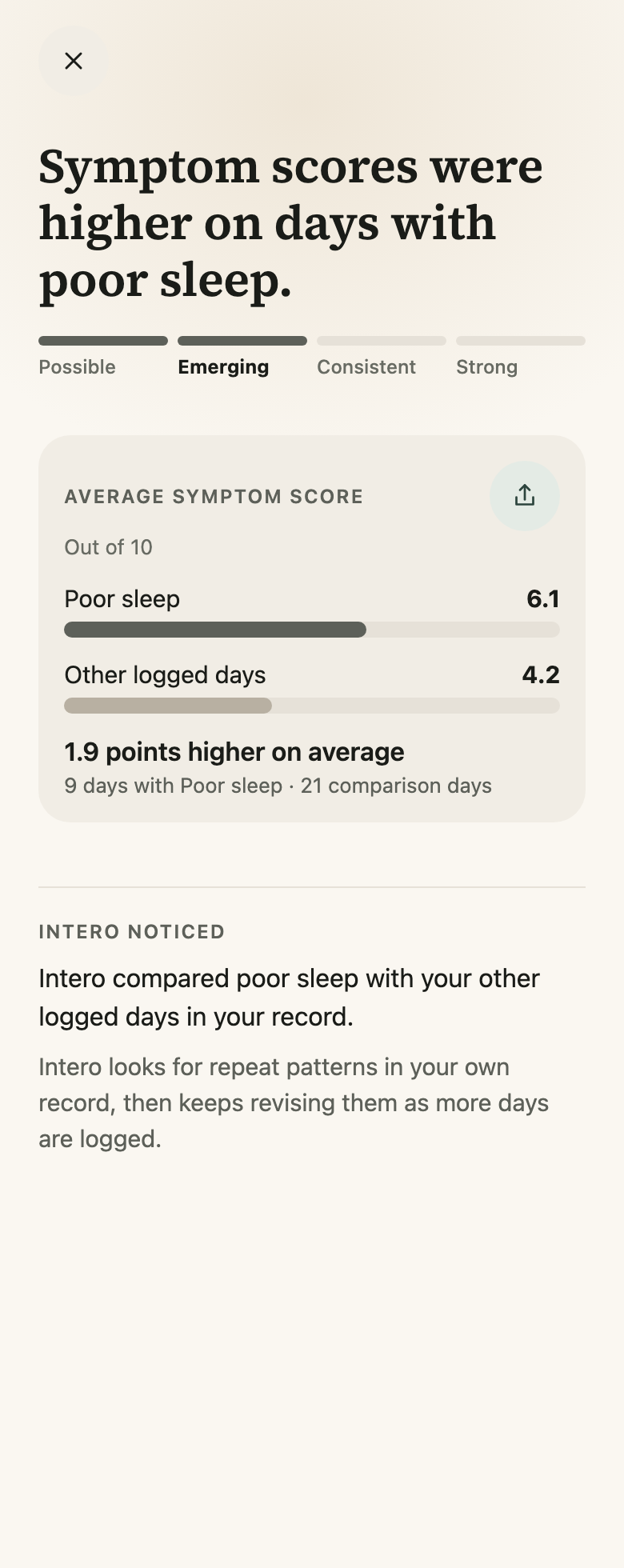

Who Intero is for.
Intero is for people with unexplained or fluctuating pelvic and urinary symptoms. A user may have CPPS, IC, pelvic floor dysfunction, bladder sensitivity, post infection persistence, or no diagnosis at all.
The common thread is not the label. It is the experience: something keeps happening inside my body, and I cannot tell what changed before symptoms got worse. Many people arrive here after trying notes, spreadsheets, or generic trackers that asked for effort and returned very little understanding.
The product is built for bad-day use. Logging has to stay fast, low friction, and emotionally steady when someone is tired, in pain, or trying to get ready for an appointment.
What Intero refuses to be.
Intero is not a coach, not a diagnostic tool, and not a product that turns symptom tracking into self improvement theater. It does not manufacture certainty, offer treatment guidance, or pretend that logging itself is progress.
It is also not a business built on moving health data through someone else's server. Intero stores data locally, does not require an account, and does not store your symptom record on its servers. For a product handling this kind of information, privacy is not a feature. It is the baseline.
Start with today. Build a clearer history.
Track symptoms and flare-ups in Intero, see what your history shows, and bring clearer details into appointments.