Tracking and patterns
What to track in a bladder diary.
A bladder diary counts bathroom visits. A more useful record shows what changed around them. That context is what helps you and your doctor understand the pattern.
By Intero · Updated June 15, 2026 · 7 min read
Intero is observational, not diagnostic. Journal content is informational only and is not medical advice.
Listen to this article
6 min listen
A useful bladder diary tracks frequency plus daily context, so you and your doctor can see what changed before symptoms got worse.
Your urologist has probably asked you to keep a bladder diary. A simple one: note the time you need to urinate and the volume if you can measure it. The point is to see the pattern. How many times a day? How often at night? Is the volume consistent, or does it swing?
That data is useful. A clear frequency count is real information. But a bare diary, timestamps and numbers, usually leaves out the part that matters most: what was happening before the frequency changed. What was different on the day you woke up needing the bathroom more? A better record captures that.
Download a printable symptom diary
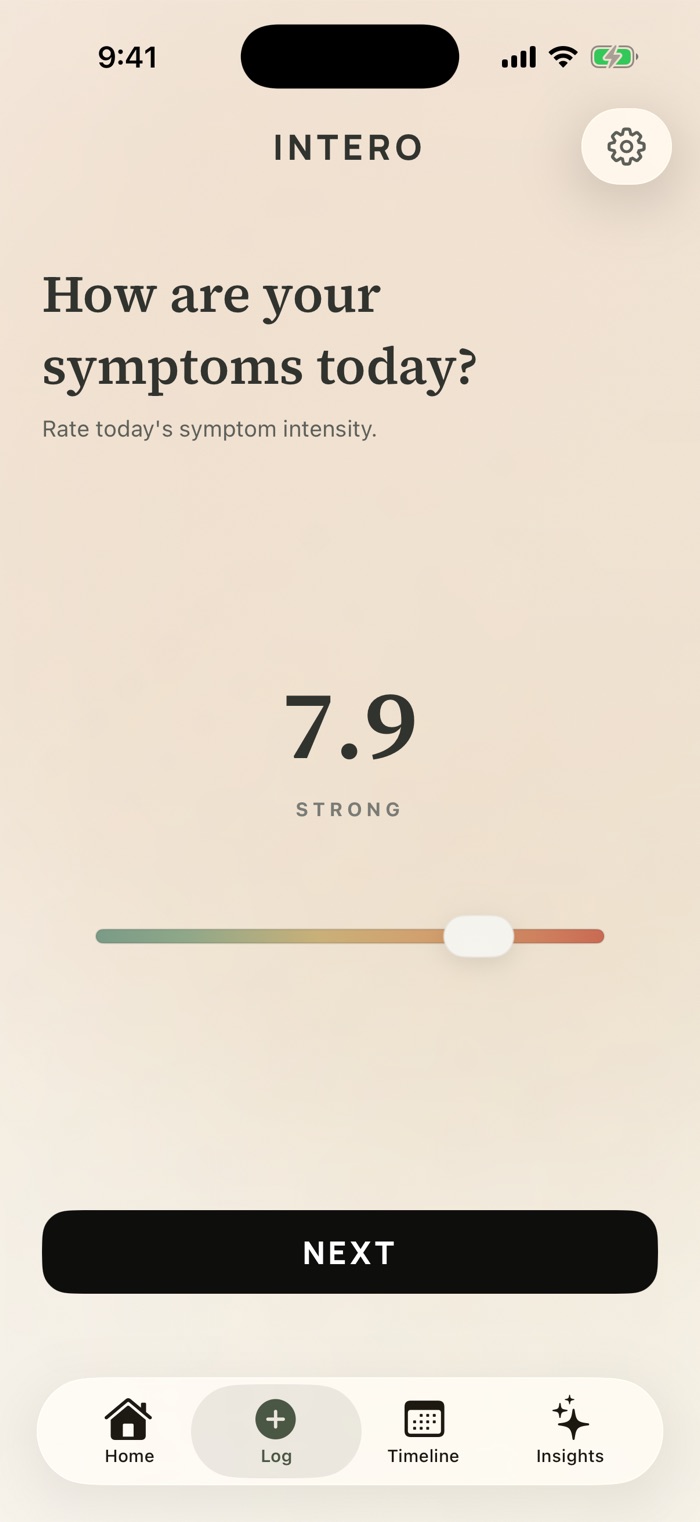
Use the PDF today, or track the same symptoms on iPhone with Intero:
- Track urgency and frequency in seconds.
- See what changed before urgency spiked.
- Bring a clear pattern to your doctor.

What a bladder diary is
A bladder diary is a daily record of your urination pattern. The standard version is simple: the time you need to urinate, and ideally the volume. Some versions add urgency level, whether it felt sudden or you had warning. Some track night-time bathroom visits separately on their own timeline. The data aggregates over a week or two, and a pattern emerges: your typical baseline, and where the variation lives.
The diary serves a clinical purpose. A urologist needs to know if you are in the 8-times-a-day range or the 15-times-a-day range. They need to know if night-time urgency is occasional or a pattern. They need to know if volumes are sustaining or dropping. That data points to different underlying conditions and different next steps.
Why counting alone misses the pattern
A frequency count is a number. It does not explain itself. You might need the bathroom 12 times on a Tuesday and 8 times on a Wednesday. The diary shows the difference. It does not show what surrounded it. Did you drink more water? Were you stressed? Did you sleep poorly? Did you sit for eight hours without moving? Was your cycle in a particular phase? All of those things matter to understanding how the 12 fits into the rest of your record.
If you go to your appointment with a count alone, you and your doctor are both guessing. They see the number and try to name a condition to match it. You go home wondering whether you should be worried, or whether something simple explains it. Most people with bladder symptoms spend months in that gap.
The clinical bladder diary serves its purpose. It shows the urologist your baseline frequency, volume, and the presence of night-time urgency. But it does not show your doctor what they actually need to make sense of your symptoms: what changed, and when, and in relation to what.
The context that changes everything
A record that pairs your urination pattern with surrounding context is a different tool. Alongside frequency and volume, you note: sleep quality and duration the night before, stress level, physical activity, dietary notes, cycle day if relevant, or any major schedule change. That context is not clinical. It is the life you actually live.
When you review that record after four to six weeks, a pattern often becomes visible. Not because the explanations are simple, they rarely are, but because the same combination keeps appearing before symptoms got worse. You may notice that urgency is often higher after high stress and short sleep. Or that frequency is often higher the day after caffeine combined with low water intake. Or that a good day tends to follow a day of normal movement and solid sleep. The pattern is individual. The record is what makes it visible.
Context transforms a compliance checklist into a tool that helps you understand your own body. Your urologist still gets the frequency data they need. But you also get to walk in with a deeper answer: I know what showed up before these days. I have seen it repeat.
Building a record your doctor can actually use
Start with the basics your urologist asked for: time and volume, or at least a frequency count. That is the foundation. Then add the surrounding context: how you slept, your stress level that day, what you ate and drank, whether you sat for long stretches or moved regularly, and any schedule disruption.
Keep the record for at least two weeks, ideally four to six. A pattern does not emerge in three days. It emerges when you have enough data to see what changed before symptoms got worse. When you go to your appointment, bring the numbers your urologist needs, but also bring the pattern you have seen. Do not guess at the explanation. Say what you observed: on the days I have elevated stress and short sleep, my frequency is higher, usually starting the next morning. That is specific. That gives your doctor something real to talk through.
A record that includes context is also a record you can actually understand. You are not just submitting data. You are learning what your body shows you on different days, under different conditions. That understanding is what stays with you after the appointment.
Why this matters
A bladder diary counts bathroom visits. But a frequency count without context is just a number sitting in isolation. Your doctor sees it and guesses. You go home wondering what it means.
A record that captures context alongside frequency shows the pattern. Not always a simple explanation. But the combination that can appear before symptoms got worse is something you can actually understand and explain.
Common questions
- What is a bladder diary?
- A bladder diary is a daily record of your urination pattern. It typically includes the time you need to urinate and the volume, tracked over a week or two. The data shows your baseline frequency, volume variation, and whether night-time urgency is present.
- Why do doctors recommend keeping a bladder diary?
- Urologists use bladder diary data to understand your baseline frequency, volume, and night-time urgency pattern. That information helps them identify the underlying condition and recommend appropriate next steps.
- What should you track in a bladder diary besides frequency?
- Context matters. Track your sleep quality and duration, stress level, physical activity, dietary notes, and any major schedule changes. That context shows what showed up before higher-frequency days, turning a compliance checklist into a record you can actually understand.
- How long should you keep a bladder diary?
- Keep the record for at least two weeks, ideally four to six. A pattern does not emerge in three days. It emerges when you have enough data to see what combination keeps appearing before symptoms got worse.
Sources