IC and pelvic health
IC vs UTI: how to tell the difference.
Interstitial cystitis and urinary tract infections share symptoms that look nearly identical. The difference shows up in what the urine culture finds — or does not.
By Intero · Updated June 15, 2026 · 8 min read
Intero is observational, not diagnostic. Journal content is informational only and is not medical advice.
Interstitial cystitis and UTIs share nearly identical symptoms. The difference is in what the urine culture shows. Here is what separates them and why it matters.
The first question most people with interstitial cystitis ask, before they know they have it, is whether they have a UTI. The symptoms feel the same. Burning. Urgency. Pressure in the bladder. The feeling that something is wrong right now. A UTI is the logical explanation, especially if you have had one before.
The problem is that for some people, the culture comes back negative. Or it comes back positive, treatment happens, and the symptoms return — maybe not immediately, but soon enough to raise a question. If that pattern repeats, it is worth understanding what actually separates these two conditions and why the distinction matters for getting a useful answer.
Keep a symptom history with Intero
Start with a daily entry, then build a record you can return to.
- Record symptoms and context.
- Review your history over time.
- Prepare a summary for appointments.

IC and UTI symptoms are almost identical
Both conditions produce urgency that arrives fast and does not wait. Both cause burning during or after urination. Both increase how often you need to go. Both can produce pelvic pressure or discomfort. The experience, sitting in the middle of a bad stretch, is often indistinguishable from one to the other.
This overlap is why IC is so frequently misidentified early on. The symptoms point toward infection. The instinct is to test and treat. Sometimes the symptoms ease — at least initially — which makes the next flare more confusing, not less. If you have gone through that cycle more than once, you are not imagining it. That pattern is a data point.
The urine culture is where the two conditions diverge
A urinary tract infection is caused by bacteria. A properly run urine culture will show significant bacterial growth. That is how a UTI is confirmed. With interstitial cystitis, bacteria are not the cause. The bladder lining is affected — through mechanisms still not fully settled — and the culture comes back negative, or shows only trace growth that does not meet diagnostic criteria.
This is the most important practical difference: IC produces symptoms without infection. The urgency is real. The burning is real. The pressure is real. But there is no bacterial pathogen driving any of it. Antibiotics will not resolve interstitial cystitis because there is nothing for them to target.
If your cultures consistently come back negative while symptoms persist — or if you complete a course of antibiotics and symptoms return within days or weeks — that pattern is clinically significant. It is worth documenting carefully and bringing to a urologist, written down, with specifics about how many times it has happened and what the results showed each time.
Repeated UTI diagnoses can delay an IC diagnosis by years
The diagnostic path for IC is often long. People can spend months or years being treated for infections they do not have, or getting inconclusive test results that do not point anywhere useful. The average time from symptom onset to an IC diagnosis has historically been measured in years, not months.
Part of why this happens is that IC has no single definitive test. It is diagnosed by ruling other causes out — infections, structural problems, other conditions with similar presentations. A negative culture is a necessary step in that process, but it is not always enough to move the conversation forward, especially in a short appointment with a generalist who is not familiar with IC.
If you have had recurring bladder symptoms with negative cultures, or if antibiotic courses consistently fail to produce lasting relief, that is the kind of information to bring written to a urologist. How many episodes. What the culture results showed. How long relief lasted after each treatment. That specificity changes what the appointment can accomplish.
What a symptom record shows that tests do not
A urine culture is a snapshot. It tells you whether bacteria were present in that sample at that moment. It does not show how symptoms have moved over time, which weeks were harder, whether urgency and burning have been consistent across months, or what else was happening on the days symptoms peaked.
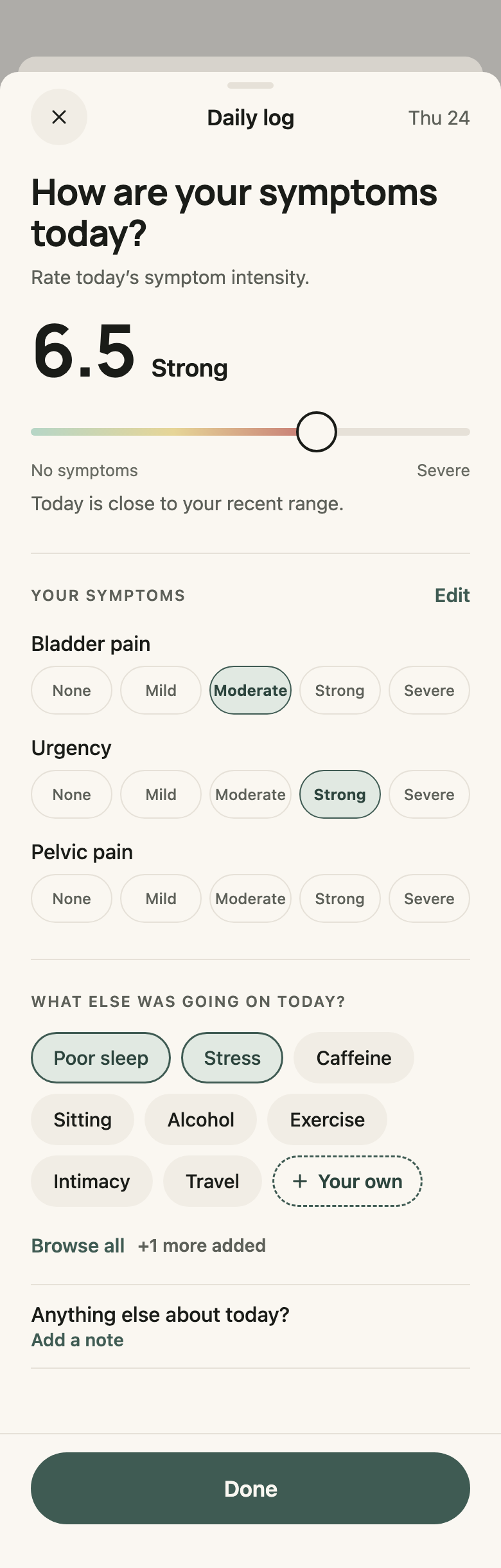
A symptom record built over several weeks — logging urgency, pain or pressure, burning, frequency, and daily context like sleep and stress — builds a longitudinal picture that a culture cannot. That record can show patterns a single appointment misses: symptoms arriving on days with no infection, a baseline that shifts with sleep or stress, rougher stretches that come in clusters without any bacterial trigger.
That record is not a diagnosis. It does not tell you whether you have IC. What it does is give you something specific to discuss with a clinician — something beyond "this keeps happening" and closer to "here is exactly what this pattern looks like over time."
Why this matters
IC and UTI symptoms look the same in the moment. Without tracking them over time, repeated negative cultures or failed antibiotic courses can feel like dead ends rather than diagnostic signals.
A symptom record that captures what happened and when — across weeks, not just a single visit — gives a clinician something specific to work with. It is the difference between "this keeps happening" and "here is the pattern."
Common questions
- How do you tell the difference between IC and a UTI?
- The key difference is what a urine culture shows. A UTI is caused by bacteria and will show bacterial growth on a culture. Interstitial cystitis produces nearly identical symptoms — urgency, burning, pelvic pressure — but cultures come back negative because bacteria are not the cause. A clinician will typically consider IC when symptoms persist and cultures do not confirm infection.
- Can you have IC symptoms with a negative urine culture?
- Yes. A negative urine culture is one of the hallmarks of the diagnostic picture for interstitial cystitis. IC symptoms are not caused by bacteria, so there is nothing for a culture to detect. Persistent bladder pain, urgency, or burning with consistently negative cultures is a pattern worth discussing with a urologist.
- Why do bladder symptoms keep coming back after antibiotic treatment?
- If the underlying cause is interstitial cystitis rather than a bacterial infection, antibiotics will not address the source of the symptoms. Some people experience temporary relief, but symptoms return because the original cause was not bacterial. Recurring symptoms after repeated antibiotic courses — especially with negative cultures — is a pattern worth documenting and bringing to a specialist.
- What does interstitial cystitis feel like compared to a UTI?
- In the moment, IC and UTI symptoms are often indistinguishable: urgency, burning, pelvic pressure, and high frequency. The difference that tends to emerge over time is persistence. UTI symptoms typically resolve with the right antibiotic. IC symptoms continue, fluctuate, and return — without a consistent bacterial trigger.
Sources