Understanding your symptoms
Overactive bladder tracking.
Overactive bladder tracking is not about counting bathroom visits. It is about understanding what changed before urgency got worse. Most apps either miss the right context or feel too clinical to actually use.
By Intero · Updated June 15, 2026 · 8 min read
Intero is observational, not diagnostic. Journal content is informational only and is not medical advice.
Overactive bladder tracking should capture urgency, context, and what changed before symptoms got worse, not just bathroom frequency.
If you have overactive bladder, you have probably kept some kind of record. A note on your phone. A tally. Maybe even an app. But somewhere in that tracking, you hit a wall: the app asks for things that do not matter, or it asks in a way that feels clinical instead of useful.
The problem is not that frequency count is meaningless. It is that frequency alone tells almost nothing. Two people need the bathroom eight times a day. For one, urgency is high all eight times. For the other, only two urges are truly strong; the rest are preemptive. The number hides what actually matters.
Overactive bladder tracking that works does not just count trips to the bathroom. It captures urgency and what surrounds it.
Download a printable symptom diary
Use the PDF today, or track the same symptoms on iPhone with Intero:
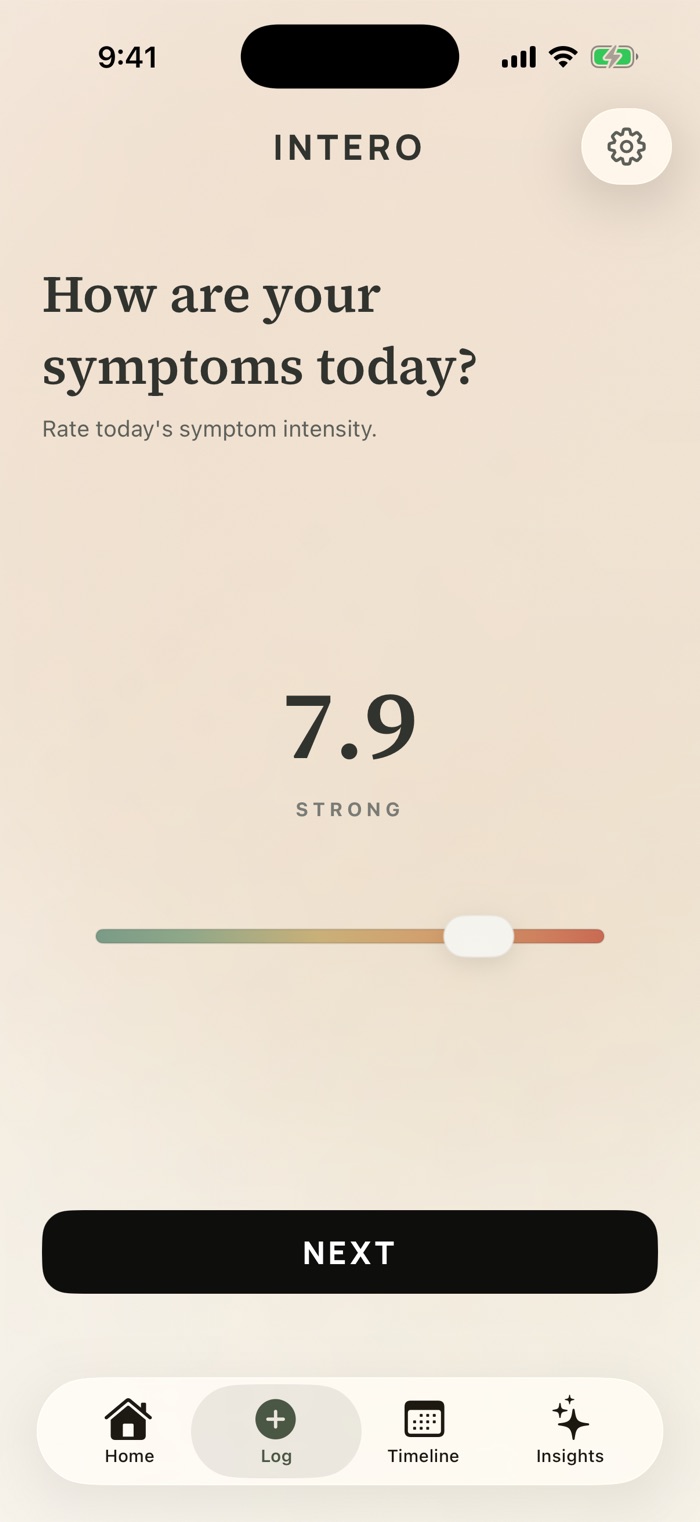
- Track urgency and frequency in seconds.
- See what changed before urgency spiked.
- Bring a clear pattern to your doctor.

OAB is about urgency, not just frequency
Overactive bladder is about urgency, not just how often you need the bathroom. You can go six times a day and have OAB if each urge is strong. You can go ten times and not have OAB if the urges are mild.
The most useful thing to track in OAB is not the count. It is the sensation itself: how urgent the urge feels, how much warning you get, whether you could have waited. A clinical diary counts trips. A useful record captures what the urgency actually feels like.
Most apps collapse everything into frequency. They ask how many times, and stop. That number does not tell you what surrounded the urgency, or how one day differed from another.
Why standard clinical diaries do not capture what matters
Standard bladder diaries were built for clinical research. They ask for time and volume in a format designed for urology studies. If you are in a research study, that is what you need. If you are trying to understand your own pattern, you are staring at a form built for someone else.
A clinical diary answers the doctor's question: how many times in 24 hours? It does not answer yours: why is Tuesday harder? When did urgency spike? What was different that morning? What does Tuesday have in common with the other hard days?
There is also a practical problem. A proper clinical diary requires you to record the exact time and volume of each bathroom visit. Most people stop after a few days. The barrier is too high. You need something you can fill out in the moment, not something that requires memory and precision.
What can show up before urgency gets worse
When you track urgency with context, the pattern is often easier to read: the same conditions before symptoms got worse, a baseline that shifts with sleep or stress, or a time of day that is often worse.
What matters for OAB is sleep quality, stress level, caffeine, fluid intake, how much you moved, whether your routine changed. After three or four weeks of tracking these things alongside urgency, you can often see what appeared before symptoms got worse and what still needs more time.
The record is what makes that pattern visible.
What a useful OAB record makes possible
A record that captures urgency quality alongside context gives you language for what is happening. It shows your doctor that you understand your pattern and can describe it with data. A frequency count alone does not do that.
In the appointment, your doctor can ask real questions: Is this worse when you are stressed? Does sleep matter? Is there a time of day pattern? A detailed record answers those questions. A tally does not.
Over time, the record becomes a tool for you. You recognize what makes a day manageable. You can see whether something you tried - changing caffeine, adjusting timing, adding movement - actually changed anything. That is when tracking stops being a chore.
Why this matters
Overactive bladder feels random. Urgency can arrive without an obvious immediate explanation. Most tracking tools ask for the wrong things or ask in a clinical way that is impossible to sustain. You need something fast and immediate.
A record that tracks urgency quality with context is how you move from guessing to knowing. The pattern stops being invisible. You can see what your body is actually doing.
Common questions
- What is overactive bladder tracking?
- Overactive bladder tracking captures the quality and context of urgency, not just how often you need the bathroom. It records urgency level, what came before, and what you noticed that day so you can spot patterns.
- Why do standard clinical diaries not work for OAB?
- Standard clinical bladder diaries were built for research and count bathroom visits by time and volume. They do not answer what you actually need to know: why is one day harder than another, and what can you do about it.
- What context matters for OAB tracking?
- Sleep quality, stress level, caffeine and fluid intake, movement, and routine changes all affect urgency. Tracking these alongside urgency is how you see what changed before symptoms got worse.
- How long does it take to see OAB patterns?
- Usually three to four weeks of consistent tracking with context. After that, you can often see what appeared before symptoms got worse and what still needs more time.
Sources