Appointments and doctors
Preparing for a urology appointment.
A urology appointment can be hard to prepare for when your symptoms shift from day to day. A structured record gives you something clearer to bring into the room.
By Intero · Updated June 15, 2026 · 8 min read
Intero is observational, not diagnostic. Journal content is informational only and is not medical advice.
A structured symptom record can make a urology appointment easier. Here is what to track, bring, and prepare before you go.
You have been living with this for months. Urgency that spikes without warning. Pressure that lingers. Days that are manageable, and stretches that are not. You have tried to explain it before and left feeling unheard or rushed. Or worse, dismissed, brushed off, or told the symptoms are all in your head. So this time, you decide to prepare differently. You write notes. You keep a log. You try to arrive with something concrete.
But scattered notes are not the same as a useful record. Without structure, the appointment can turn into the same conversation: how often are you urinating, when did it start, how bad is it today. The pattern disappears. The details that matter most, what a typical hard day looks like, what happened before it, what changed recently, get buried.
A record built around a pattern gives the conversation a better starting point. You are not trying to reconstruct everything from memory. You are showing what has been happening across time, in a form that is easier to talk through.
Download a printable symptom diary
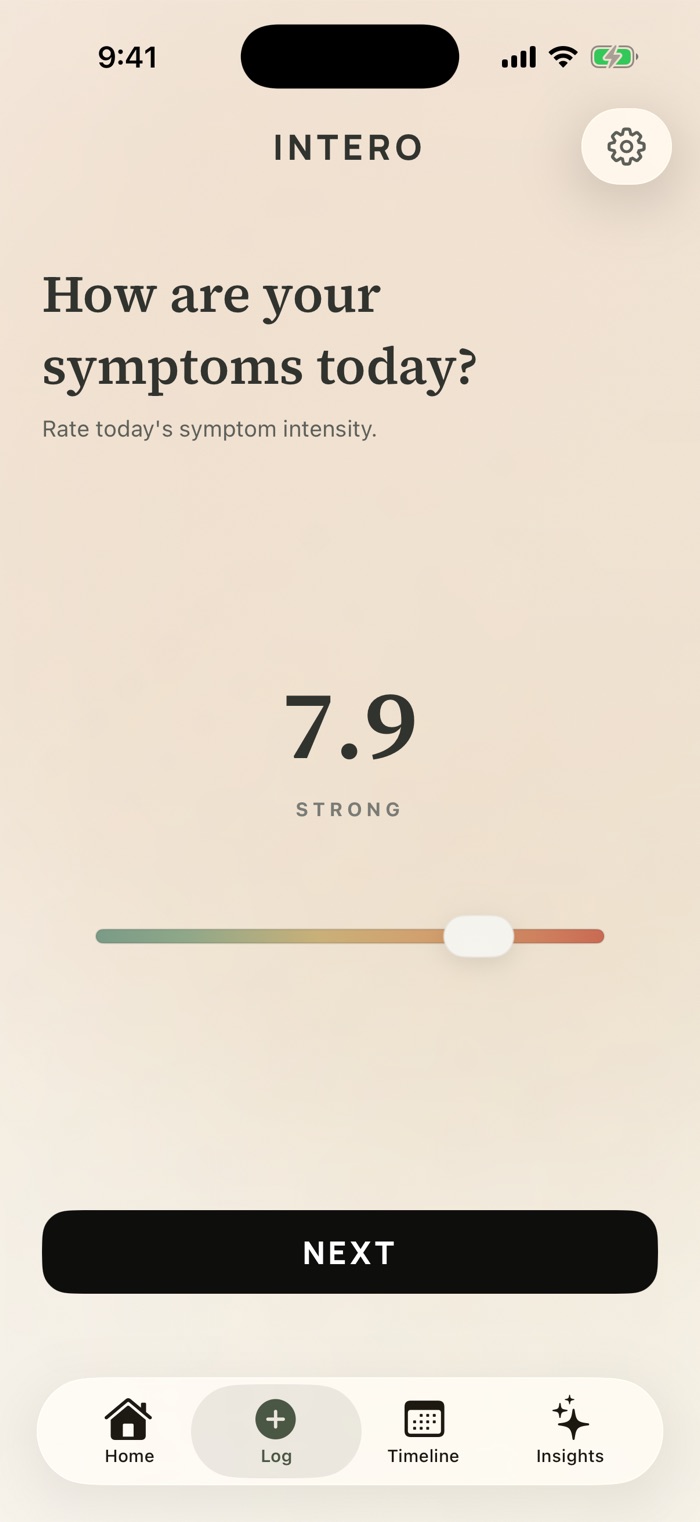
Use the PDF today, or track the same symptoms on iPhone with Intero:
- A symptom history instead of memory.
- Export a clean timeline for your doctor.
- Log symptoms and context in seconds.

Why preparation often fails before the appointment.
Most people who track symptoms before a urology appointment are trying to answer the same question the doctor will ask: what has been going on? The tracking feels like it should help. But a list of what happened is not the same as a pattern. Without the pattern visible, you end up doing the hard part in real time, reaching for words while the appointment clock is already moving.
A clinician is usually listening for a few things. Consistency. A before and after. What surrounds days when symptoms got worse. But most people arrive with something messier: a Notes app list, screenshots, calendar memories, a few bad-day entries, maybe a spreadsheet they started and stopped. The pattern might be in there, but if the structure is missing, you still have to dig it out under pressure.
That is why notes that felt thorough at home can feel less useful in the exam room. You did the work of recording. The record just has not been shaped into something you can use quickly.
What a urologist can use from your symptom history.
A urologist looking at pelvic or urinary symptoms may ask a few practical questions. How long has this been happening? What does a typical manageable day look like compared with a harder one? Are there things that seem to show up before the rougher stretches? Has anything changed recently? Does the severity stay in one range, or does it swing?
Those questions do not need every entry from every day. They need enough structure across enough time to show what changed before symptoms got worse. What your normal range has looked like. How days when symptoms got worse are different. What was happening around them. That is the gap between a log and a useful record.
The record is not there to diagnose anything. It is there to help you describe your history more clearly, so the conversation can start from what you have actually been seeing.
The record format that holds up better.
A useful appointment record is organized, not exhaustive. Three clear examples of a repeated pattern can be easier to discuss than thirty scattered entries. When the same sequence shows up more than once, you have something specific to point to.
The format is simple: symptom level next to context. Sleep quality. Stress. Sitting and movement. Diet changes. Medications or routine shifts. When context sits beside the symptom data, the surrounding pattern becomes easier to see. You do not have to explain every entry. You can name the sequence.
Many people use notes or a spreadsheet before an appointment. That can work, but it usually means doing the sorting yourself. Before the visit, you are hunting for the clearest examples, trying to explain what a normal week has looked like, and remembering what changed before things got harder. A record with the same structure from the start makes that review less fragile.
How the right record changes what you can say.
When you arrive with a structured record, the appointment has a different starting point. You can show that you have been paying attention. You can separate the ordinary range from the rougher stretches. You can point to a few examples instead of trying to summarize months from memory.
Preparation is not about memorizing every detail. It is about having the record organized enough that when someone asks what typically happens, you can answer plainly: on these days, when sleep was short and stress was elevated, this is what I saw. Then you can show the entries behind it.
That does not guarantee a perfect appointment. It does make the history easier to bring into the room. Less time goes to rebuilding the basics, and more of the conversation can start from the record you already made.
Why this matters
People often arrive at urology appointments unable to explain what has been happening because their tracking has not shown them the pattern yet. A structured record makes that pattern easier to find before the visit.
The right preparation does not turn the appointment into something it is not. It gives you a clearer symptom history to talk from, especially when memory alone has not been enough.
Common questions
- What should I bring to a urology appointment?
- Bring a structured symptom record that shows entries across time. A useful record includes your ordinary range, a few rougher stretches, and the context that appeared around those rougher days.
- How do I prepare symptom data for a doctor visit?
- Track symptom level alongside context like sleep, stress, sitting, movement, dietary changes, medications, and routine shifts. Before the visit, look for two or three clear examples where the same sequence appears more than once.
- What makes a symptom record useful to a urologist?
- A useful record has structure. It shows a baseline, how symptoms compare day to day, what context surrounds rougher stretches, and whether the pattern repeats.
- How do I explain symptoms clearly in a urology appointment?
- Use the record to talk through a few clear examples. Instead of trying to summarize everything from memory, point to what changed before symptoms got worse and describe what the entries show.
Sources